Extended Producer Responsibility for Packaging in the USA: Who Pays for Recycling Now?
Seven US states have passed packaging EPR laws. Why they do it, when each state rolls out, how producers fund the recycling infrastructure – and how a fee per pound is calculated.
Think of a cardboard shipping box, a plastic mailer, a strip of tape and a label. For decades the city – and therefore every resident through taxes or the waste bill – paid for collecting, sorting and recycling them. The company that put the package on the market paid nothing for what happened after the customer opened it.
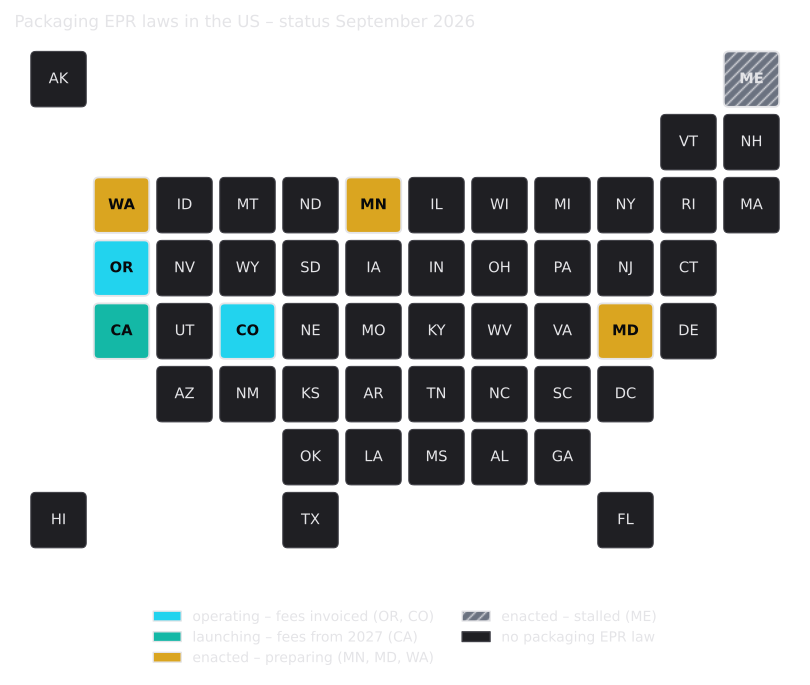
That is changing. Since July 2025 in Oregon and January 2026 in Colorado, the company behind the package pays instead: per pound, per material. Seven US states have passed such laws, and the next ones are under discussion.
This article explains:
- what Extended Producer Responsibility (EPR) for packaging means;
- why US states are adopting it;
- which states roll out when;
- how the money flows;
- how a fee per pound is calculated.
Status: late September 2026. Laws, fee schedules and deadlines change frequently – this article explains the system and does not replace legal advice.
What EPR Means
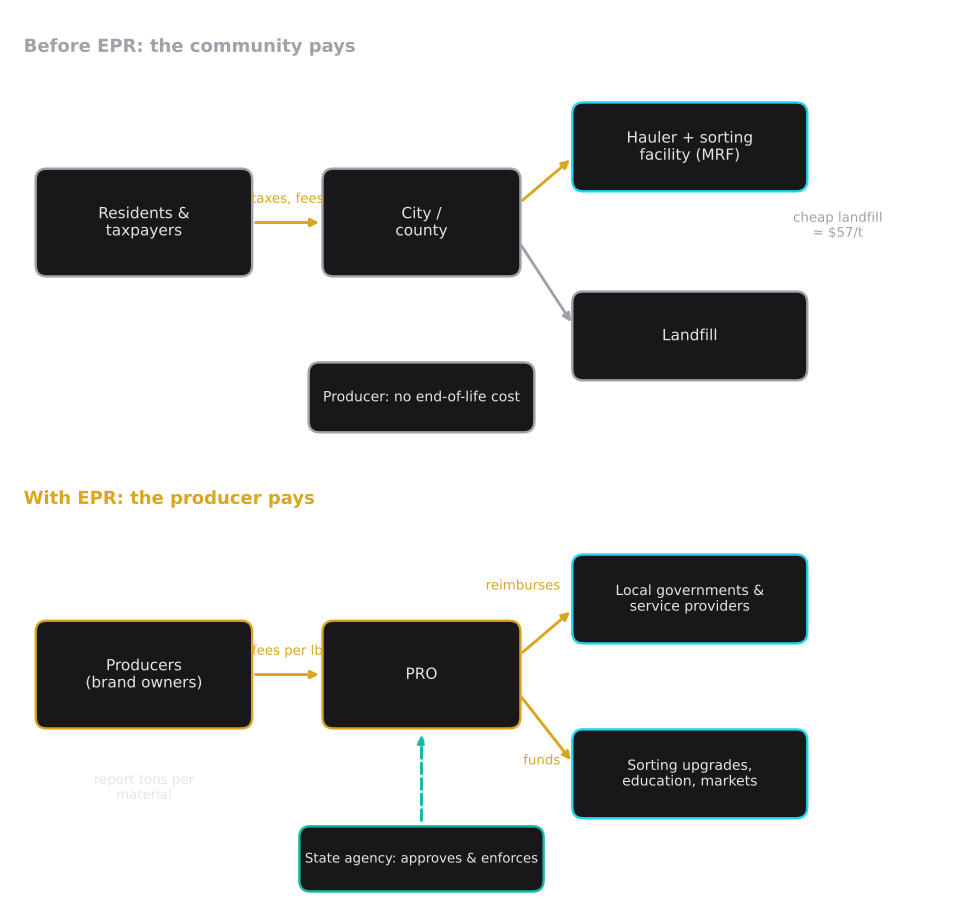
The principle behind Extended Producer Responsibility is simple: whoever puts packaging on the market is also financially responsible for its end of life. Four actors make the system work:
- Producers – usually the brand owner; otherwise the licensee, importer or first distributor. They report how many pounds of each packaging material they sell into the state.
- The Producer Responsibility Organization (PRO) – a non-profit set up by producers. It collects the fees, writes the program plan and pays the recycling system. In six of the seven states this role is held by the Circular Action Alliance (CAA).
- The state agency – approves the program plan, defines which materials count as recyclable and enforces the rules.
- Local governments and service providers – they collect and sort the material and are reimbursed or funded by the PRO.
Europe has worked this way for decades; Germany, for example, runs a central public registry that every producer must join. The big difference in the US: there is no federal law. EPR is built state by state, each with its own rules and deadlines.
Why Now? The Background
Local governments carry the cost
In the US, packaging recycling has traditionally been a municipal service, funded by taxes or waste fees. Access is patchy:
- Only about 59 % of US households have curbside recycling.
- Where only drop-off sites exist, participation falls to about 30 %.
The people who design the packaging have no financial reason to make it easy to recycle.
Plastics are barely recycled
The latest national EPA data (2018) show a clear split. Containers and packaging make up 82.2 million tons a year – 28 % of all municipal solid waste. Overall, 53.9 % of it is recycled, but the materials differ hugely:
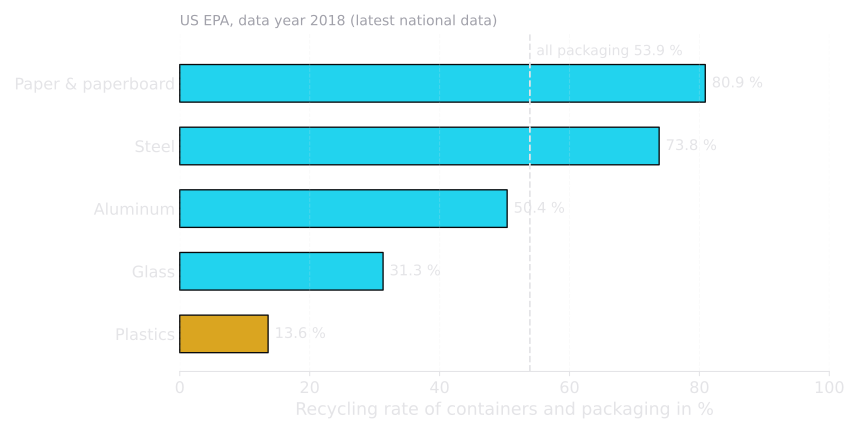
Cardboard works, because it has an established market. Plastic packaging reaches only 13.6 %.
Landfill is cheap
Why hasn’t the market solved this on its own? Because throwing things away is inexpensive. The average fee to dump a ton of municipal waste at a US landfill was **43 in the Southeast to $84 in the Northeast.
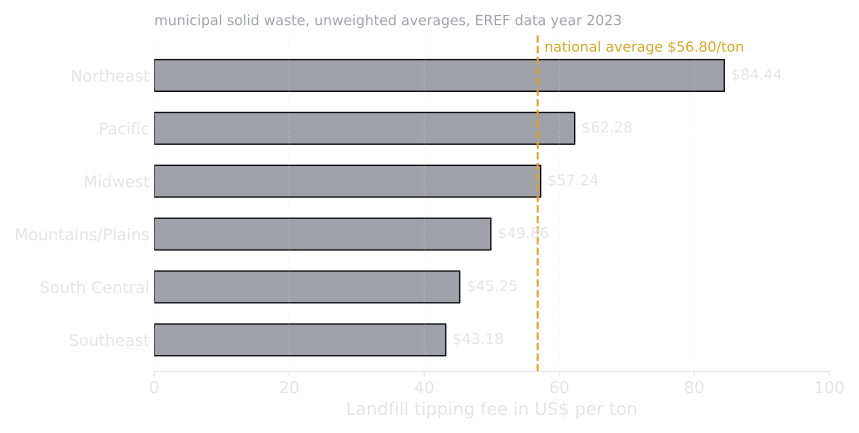
When landfill costs little, collecting, sorting and marketing a mixed stream of paper and plastics rarely pays for itself. Many European countries make disposal expensive through landfill taxes and restrictions. In the US, the cheap landfill sets the benchmark that recycling has to beat.
The 2018 shock
In 2018, China’s “National Sword” policy closed the most important export market for mixed paper and plastics. Prices collapsed, the cost of municipal recycling programs rose, and some communities cut back their programs.
The lesson for many states: a system that depends on volatile commodity markets and tight municipal budgets needs a stable source of money. EPR moves the cost from taxpayers to producers. At the same time it gives producers a price signal to design packaging that is lighter and easier to recycle.
The Seven-State Wave: Who Rolls Out When
| State | Law | Model | Key dates | Status (Sep 2026) |
|---|---|---|---|---|
| Maine | LD 1541 (2021) | reimbursement of municipalities | request for proposals for a stewardship organization closed Aug 2026 with no bids | stalled |
| Oregon | SB 582 (2021) | shared responsibility | program and fees since 1 July 2025 | operating |
| Colorado | HB 22-1355 (2022) | full producer funding | fees since January 2026 | operating |
| California | SB 54 (2022) | producer funding plus $500 M/yr pollution fund | final plan and fees Oct 2026; first payments 2027 | launching |
| Minnesota | HF 3911 (2024) | reimbursement ramp | reimbursements from Feb 2029 | preparing |
| Maryland | SB 901 (2025) | reimbursement ramp | reimbursements from July 2028 | preparing |
| Washington | SB 5284 (2025) | reimbursement ramp | PRO membership since July 2026; sales ban for non-members from March 2029 | preparing |
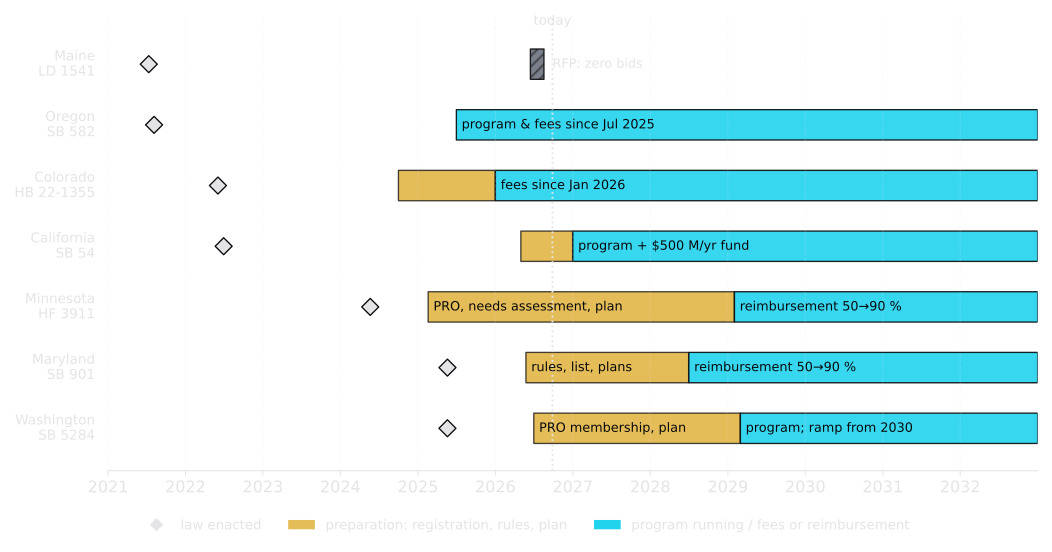
A few details stand out.
- Maine passed the first law in 2021, but is still waiting for an organization to run the program. The state’s request for proposals received zero bids in August 2026, and a revised request has been announced.
- Oregon has survived its first legal test. In August 2026 a federal court rejected a trade association’s constitutional challenge in full. The association appealed to the Ninth Circuit on 25 September 2026, so the question is not settled yet.
- California is the biggest program by far. The PRO’s draft plan estimates $1.3–1.9 billion in program costs for 2027 alone.
- New York and several other states have debated similar bills, but no new state passed a packaging EPR law in 2026.
How the Recycling Infrastructure Gets Paid
The seven laws follow three basic funding models.
1. Full producer funding – Colorado
Colorado’s producers fund a statewide recycling program:
- Money flows into expanding access (about 700,000 households are expected to gain recycling service) and into the operation of the system.
- The PRO projects 300–400 million per year by 2030.
- The goal is to raise the recycling rate for packaging and paper from about 25 % to 58 % by 2035.
2. Shared responsibility – Oregon
Oregon splits the bill. Producers pay for:
- the expansion of collection;
- transport of recyclables to processing facilities;
- contamination reduction;
- recycling depots.
Local ratepayers keep paying for the existing curbside service. Oregon also sets plastic recycling goals: 25 % by 2028, 50 % by 2040 and 70 % by 2050.
3. The reimbursement ramp – Minnesota, Maryland, Washington
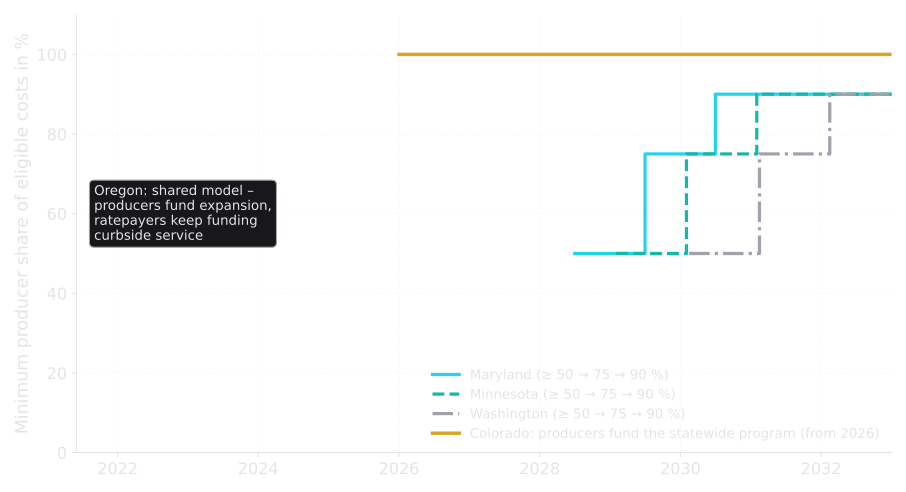
The newer laws phase in producer funding. The PRO reimburses local governments and service providers a rising share of their costs:
| State | 50 % | 75 % | 90 % |
|---|---|---|---|
| Maryland | July 2028 | July 2029 | July 2030 |
| Minnesota | Feb 2029 | Feb 2030 | Feb 2031 |
| Washington | Feb 2030 | Feb 2031 | Feb 2032 |
California: more than recycling
California’s SB 54 combines producer-funded recycling with two unique elements:
- From 2027 to 2037, producers pay $500 million per year into a Plastic Pollution Mitigation Fund, mostly for communities affected by plastic pollution.
- The law sets hard targets for single-use plastic packaging:
- 25 % source reduction by 2032, with interim steps of 10 % by 2027 and 20 % by 2030, and at least 10 % of it through reuse or refill;
- a 65 % recycling rate by 2032;
- 100 % recyclable or compostable packaging by 2032.
Needs assessment first
Before fees are set, most states run a needs assessment: a study of what the system lacks, from collection gaps to outdated sorting facilities, and what it would cost to fix. Minnesota’s draft assessment, for example, is open for public comment until November 2026.
How the Fees Are Calculated
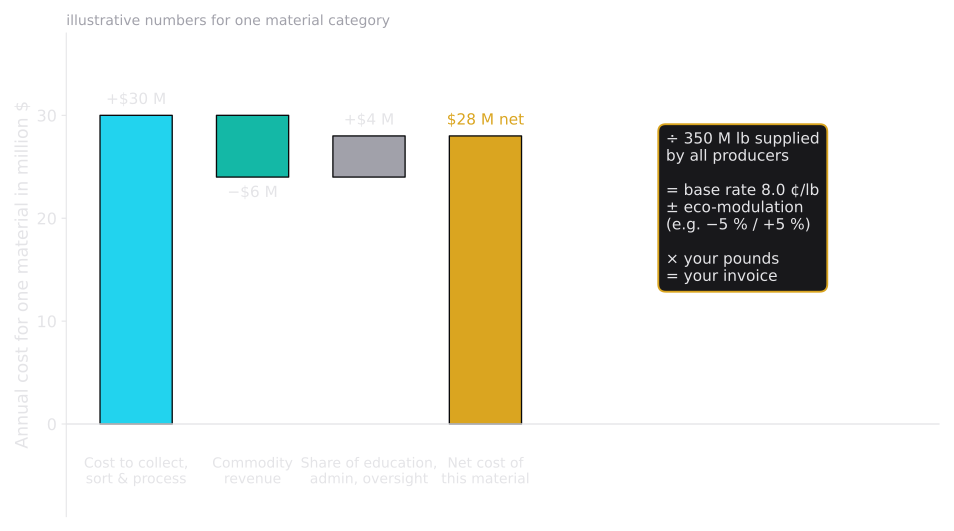
Producers do not negotiate a price. The PRO calculates a rate per pound for each material category, based on what that material costs the system:
- Add up the total cost to collect, sort and process the material, including investments.
- Subtract the revenue from selling it – aluminum and cardboard earn money, film hardly any.
- Add a share of the common costs: consumer education, state oversight, administration.
- Divide by the total pounds of that material that all producers put on the market.
- Apply eco-modulation: a bonus for easy-to-recycle packaging, a surcharge for problematic designs.
In formula form, for one material :
Here is the management cost, the commodity revenue, the allocated shared cost and the pounds supplied. Each producer’s invoice is then
with the eco-modulation factor (for example −5 % or +5 %) and the producer’s own pounds of material sold into the state.
What the rates look like
The 2026 fee schedules of the two operating states show how strongly the material matters (in US cents per pound):
| Material | Oregon 2026 | Colorado 2026 |
|---|---|---|
| Aluminum containers | 6 | 2 |
| Glass containers | 10 | 4 |
| Corrugated cardboard / kraft | 8 | 8 |
| HDPE bottles | 9 | 14 |
| PET bottles | 25 | 15 |
| PE film | 43 | 48 |
| Multi-material / not-accepted flexible packaging | 102 | 74 |
| Foamed polystyrene | 138 | 172 |
The pattern is the same in both states:
- Materials with a working recycling market cost a few cents per pound.
- Film, multi-material laminates and foam cost ten to twenty times more.
The category definitions are not identical in both states, so compare rows as orders of magnitude rather than exact equivalents. The rates differ because collection costs and commodity revenues differ. Colorado already applies small bonuses (about −5 %) and surcharges (+5 %, and at least 20 % more for materials not on the state’s recyclables list). Oregon’s 2026 schedule has no eco-modulation yet. In California, surcharges for problematic design features are planned from 2028, starting at 10 % of the base fee and rising to 100 %.
Small producers are largely exempt: in Colorado below 5 million or 1 metric ton. Low-volume producers can choose a flat annual fee instead.
A worked example: the shipping bag
What does this mean for a single shipment? The fee is rate × weight, so both factors count:
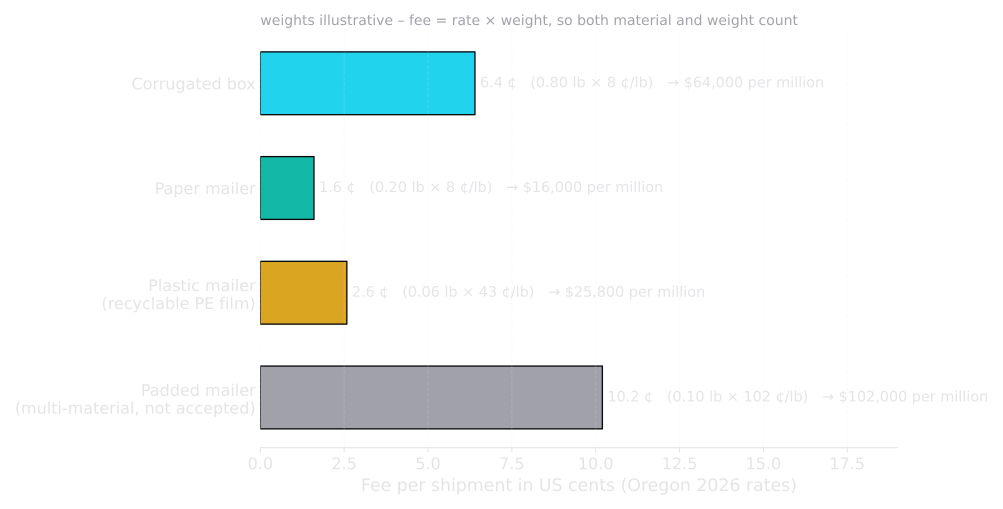
A light plastic mailer can cost less per shipment than a heavy box, even though film is five times more expensive per pound. A multi-material padded mailer, however, is expensive on both counts.
Per package these are cents. Across a million shipments per year and several states, they become a budget item – and a reason to redesign.
Who reports the tape and the label?
For shipping packaging, both Oregon and Colorado define the producer as the company that packs and ships the product to the consumer. That can be the online retailer or its logistics provider, but not the carrier that only delivers. The tape, the label and the void fill are part of that company’s package, so the brand owner or shipper reports and pays for them, not the tape or label manufacturer.
How components are broken down by material is set out in the PRO’s detailed reporting instructions. For suppliers of packaging components, the consequence is clear: their customers now see a price tag on every gram and every material choice.
What It Means for Packaging Design
- Material choice drives cost. A recyclable mono-material design on the state’s recyclables list keeps the rate low.
- Weight still counts. Lighter packaging lowers the fee directly.
- Components matter. Tapes, labels and closures can disturb recycling, for example as stickies in paper recycling, and eco-modulation will increasingly price that in.
- California adds hard limits. Source reduction and recyclability targets turn the price signal into an obligation.
- One PRO, seven rulebooks. The same organization operates in most states, which harmonizes reporting. Deadlines, material lists and fee schedules still differ from state to state.
Checklist for packaging teams
- Know in which EPR states your products are sold.
- Map every package by material and weight, including tape, labels and void fill.
- Register with the PRO before the state deadline.
- Check your materials against each state’s recyclables list.
- Redesign the components with the highest fee per shipment.
- Review the new fee schedules every year.
Key Takeaways
- Seven US states have packaging EPR laws. Oregon (since July 2025) and Colorado (since January 2026) are already charging fees, and California follows in 2027.
- EPR shifts the cost of packaging recycling from taxpayers to producers, where it was cheap landfill and volatile markets that kept recycling underfunded.
- The laws use three funding models: full producer funding (Colorado), shared responsibility (Oregon) and a reimbursement ramp to 90 % (Minnesota, Maryland, Washington).
- Fees are calculated per pound and per material from net system costs. Film and multi-material packaging cost ten to twenty times more than cardboard or aluminum.
- The shipper or brand owner reports every component, including tape and labels, so recyclable, lightweight designs are now directly rewarded.
Key Terms
- EPR (Extended Producer Responsibility): policy that makes producers financially responsible for the end of life of their packaging.
- PRO (Producer Responsibility Organization): producer-funded organization that collects fees and runs the program.
- Covered materials: packaging and paper products that fall under the law.
- Eco-modulation: bonus or surcharge on the base fee depending on recyclability and design.
- Needs assessment: state study of what the recycling system lacks and what it costs.
- Tipping fee: the price per ton for delivering waste to a landfill.
References
- US EPA: Containers and Packaging: Product-Specific Data
- EREF: Analyzing Municipal Solid Waste Landfill Tipping Fees
- The Recycling Partnership: Increasing Recycling Rates with EPR Policy
- Circular Action Alliance: 2026 Oregon Producer Fee Schedule and 2026 Colorado Producer Dues Schedule
- Oregon DEQ: Plastic Pollution and Recycling Modernization Act; ORS 459A.926 – Recycling rate of plastic
- The Colorado Sun: Colorado approves $200 million-plus package fee plan
- Packaging Dive: California publishes SB 54 EPR rules
- UCLA Luskin Center for Innovation: Understanding SB 54
- DLA Piper: California’s EPR Program Plan
- Holland & Knight: Federal Court Upholds Oregon’s EPR Law
- National Association of Wholesaler-Distributors: Appeal of the Oregon EPR ruling
- Sustainable Packaging Coalition: Packaging Policy Roundup, September 2026
- EPR Atlas: state pages for Maine, Minnesota, Maryland, Washington